Ernest Thayer
Reluctant Author of America’s Favorite Baseball Poem

By Brian D’Ambrosio
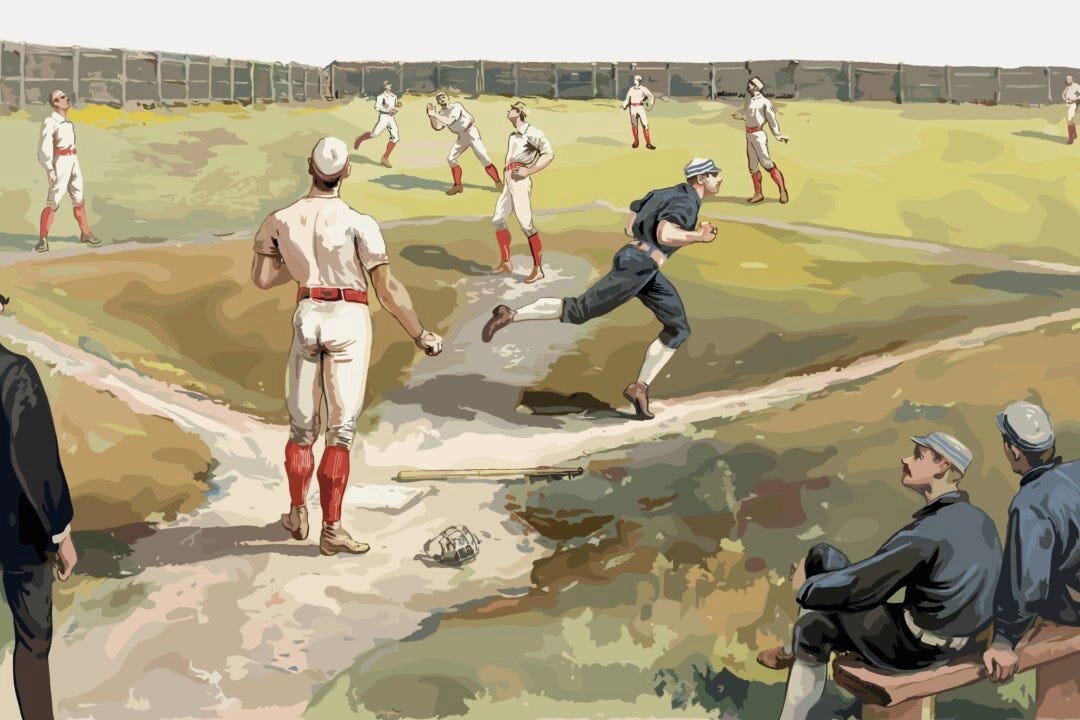
In the summer of 1888, little-known columnist Ernest Lawrence Thayer (1863–1940) published a humorous ballad in the San Francisco Examiner under a pen name. It told the story of a baseball hero’s stunning failure. At first, it seemed destined to disappear with the day’s paper. But “Casey at the Bat: A Ballad of the Republic, Sung in the Year 1888” (“Casey at the Bat”) would outlive both its creator’s expectations and his career, becoming the most famous poem about baseball ever written.
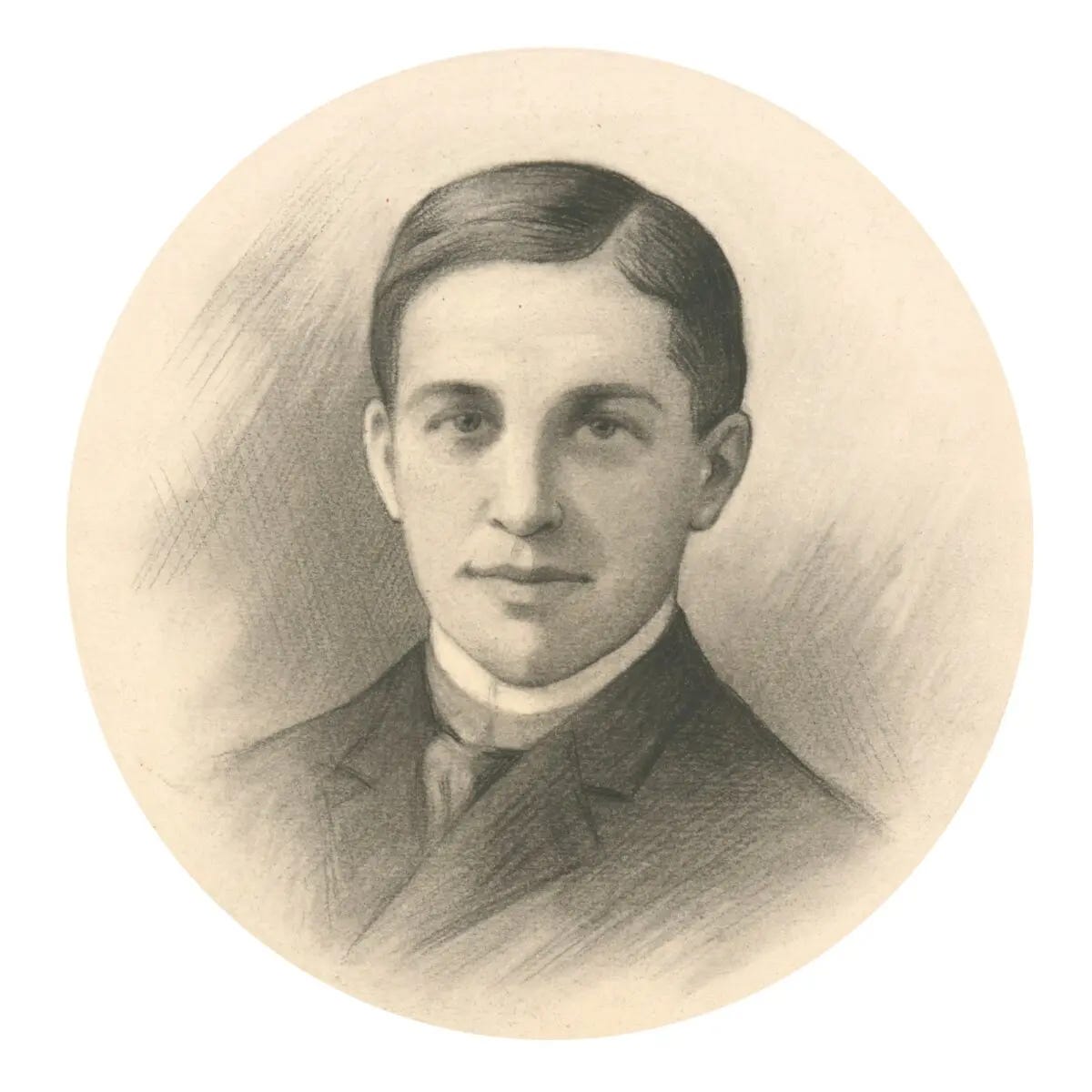
What is often forgotten is that Thayer was far more than a one-poem writer. A Harvard-educated thinker steeped in philosophy, logic, and literature, his life was marked by reserve and modesty. Thayer’s legacy left behind more than just Mudville’s melancholy.
Life of Learning
Ernest Lawrence Thayer was born in Lawrence, Massachusetts, on Aug. 14, 1863, into a family with ties to the textile industry. His father owned woolen mills in Worcester, where young Ernest grew up. Unlike the working-class kids who played baseball in city streets, Thayer’s early years were shaped by books, tutors, and the social circles of New England’s upper middle class.
At Harvard College, Thayer studied philosophy, excelling in courses on logic and metaphysics. He was also active in the publication Harvard Lampoon, contributing satirical verse and essays that demonstrated his wit and ear for rhythm. These early works show a young man capable of balancing classical form with playful humor. His writing hinted at the poetic sensibilities that would later shape “Casey at the Bat.”
The Newspaper Trade
After graduation, Thayer traveled in and around Europe and later accepted an invitation by his Harvard classmate, William Randolph Hearst (1863–1940) to join the staff at the San Francisco Examiner. Eager to broaden the paper’s appeal with wit and satire, Hearst hired Thayer to write humor columns and light verse. Thayer signed his humorous columns and comic ballads with the pseudonym “Phin,” a nod to his college nickname. While at the Examiner, Thayer produced a steady stream of comic sketches and playful ballads, mixing satire with everyday observations. His writings poked fun at politics, lampooned social fads, and skewered the quirks of city life. These contributions illustrate that his gifts as a humorist extended well beyond the baseball diamond, demonstrating a wider facility for social satire and comic portraiture.
On June 3, 1888, “Casey at the Bat” appeared in the Examiner. Though initially modestly received, the poem took on new life when actor DeWolf Hopper (1858–1935) began performing it on stage later that year. Hopper’s dramatic delivery, repeated thousands of times, carried “Casey at the Bat” across the country and cemented it as a piece of Americana.
Life Beyond ‘Casey’
Despite the poem’s fame, Thayer withdrew from the spotlight. After leaving San Francisco, he worked in his family’s business in Worcester. While he wrote little for publications after the 1890s, occasional humorous essays and verses surfaced, demonstrating his enduring skill with satire. Thayer’s humor often relied on precise timing, wordplay, and subtle irony, qualities that made “Casey at the Bat” memorable and engaging across generations.
Thayer downplayed his authorship of “Casey at the Bat” for many years. For a long time, the public associated the poem more closely with Hopper than with Thayer. Only later did Thayer publicly acknowledge his authorship. He lived quietly, avoiding literary fame, and married Rosalind Buel Hammett after moving to Santa Barbara, California, in 1912. Friends remembered him as reserved, intellectual, and quietly humorous.
Later Years and Legacy
Ernest Thayer died in Santa Barbara on Aug. 21, 1940, at the age of 77. By then, “Casey at the Bat” had been anthologized, parodied, and adapted into silent films, comic strips, and stage routines.
Though Thayer left no large body of work, his training in philosophy, literary craft, and satire ensured that “Casey at the Bat” was not merely a fluke. The poem’s enduring popularity stems from his precision with language, its universal themes of expectation and disappointment, and the playful rhythm that makes it as entertaining to recite as it is to read. Thayer’s story highlights the paradox of a man who created one of America’s most enduring poems while remaining indifferent to fame.